
If your smartwatch suddenly stops charging, charges only when positioned a certain way, heats up on the charger, or loses battery while connected, the cause may be more than just a bad cable.
That frustration usually starts small. A missed charge overnight. A watch that disconnects if you move it slightly. A device that shows charging, but never reaches 100%. Whether it is an Apple Watch, Samsung Galaxy Watch, Fitbit, or another wearable, charging problems often begin with subtle warning signs before complete failure.
Many smartwatch charging issues are caused by factors other than the charger itself. Most cases trace back to battery wear, charging contact issues, or internal coil damage.
Why a Smartwatch Stops Charging Even When the Charger Looks Fine
A smartwatch charger may look perfectly normal, yet the device refuses to charge. That happens because charging in wearables is more sensitive than in phones.
Because most modern smartwatches use magnetic or wireless charging instead of direct cable input, even slight interruptions in coil alignment can stop charging completely. Here’s what typically goes wrong:
- Dirty charging contacts build up from sweat, skin oil, or dust. Even a thin layer can completely block power transfer.
- Weak magnetic alignment also plays a major role. If the watch is slightly off position, the internal coil cannot receive power efficiently.
- Worn-out cables or adapters may still look fine but fail internally. Broken wires or unstable voltage often mimic a dead smartwatch.
- Incompatible chargers are another hidden issue. Many smartwatches use proprietary charging systems, so generic cables may not deliver proper current.
- Software freezes can also interrupt charging behavior. A stuck firmware state may prevent the watch from recognizing power input.
- Wireless charging runs on magnetic induction. Minor misplacement, dust on contact points, or external signals can affect power flow and interrupt charging.
A smartwatch charger not working can be misleading. The charger usually works fine, but another issue hides behind the problem.
Common Signs the Problem Is Battery Related
Battery health directly influences charging issues, and many users ignore it. People cite the charger as a major reason, but the real fault lies in internal battery wear over time.
In many older smartwatches, charging appears normal for a few minutes, then suddenly stops because the battery cannot hold incoming power consistently. Here are clear warning signs:
- The watch charges briefly and then disconnects
- Battery percentage jumps suddenly from low to high
- The device overheats while charging
- It drains immediately after reaching 100%
- Shuts down even when showing 20–30% battery
Lithium-ion batteries inside smartwatches lose efficiency over a few years. After roughly 2-3 years of frequent charging, the battery struggles to maintain or accept power.
Occasionally, the watch runs for a short period, but charging fails to work fully. This creates uncertainty, making the problem appear like a charging error rather than battery wear.
Aging cells are commonly the underlying cause when charging becomes irregular.
When Charging Failure Means Internal Hardware Damage
Some of the most persistent charging failures are linked to internal hardware damage rather than the charger itself.
- A broken charging coil often causes this issue. Wireless charging relies on internal coils, so a shock or fall can misalign or damage them.
- Internal moisture can also lead to problems. Even watches labeled water-resistant may allow small amounts of water inside over time. This causes corrosion that interrupts electrical flow.
- Corrosion around charging points or within the circuit gradually lowers conductivity, eventually stopping charging entirely.
- A fall can harm components such as the charging IC, which regulates power distribution.
- Faults at the motherboard level are rare but serious. Failure of the charging IC may leave the watch completely unresponsive.
What makes this tricky is that these failures often look like simple charger problems, but they require professional repair.
Smartwatch Charging Problems That Often Affect Apple Watch and Samsung Models
Different brands show slightly different charging behaviors. Understanding these patterns helps diagnose issues faster.
Apple Watch Charging Issues
Apple Watch uses a magnetic charging system that requires precise alignment. If the magnet connection weakens, charging becomes inconsistent.
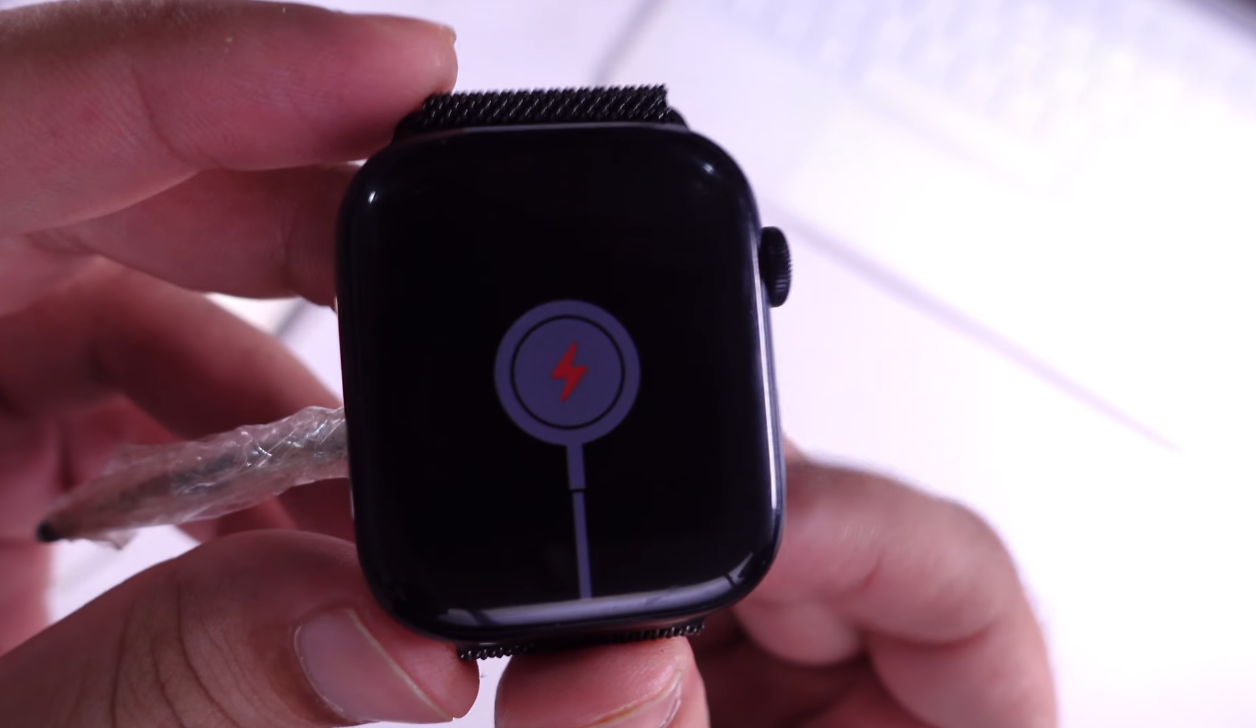
According to Apple’s charging guide, A red lightning bolt usually means the battery is critically low, and the watch detects power but cannot build enough charge immediately. Battery swelling is another risk in older models. It can push internal components and disrupt charging.
Samsung Galaxy Watch Charging Problems
Samsung watches may pause charging if the device overheats. This is a built-in protection feature. Charging pads are sensitive to positioning. Misalignment reduces charging efficiency or stops it completely. Using non-approved chargers can cause slow or failed charging.
In some cases, interference from accessories or cases affects wireless charging performance. Users also report situations where charging starts and stops repeatedly due to unstable power transfer or compatibility issues.
What You Can Safely Try Before Repair
Before considering repair, a few simple checks can help rule out minor issues.
- Clean the back of the watch and charger using a soft cloth. Removing buildup improves contact instantly.
- Test the original charger that came with the device. Third-party chargers often create inconsistent results.
- Switch the power adapter. Sometimes the issue comes from insufficient power output rather than the watch.
- Restart the smartwatch. A simple reboot can resolve software-related charging problems.
- Remove any protective case or accessory. Even a thin layer can affect wireless charging alignment.
These steps solve many basic problems, but if the issue continues, it usually indicates a deeper fault.
Why Cheap Replacement Chargers Often Create False Charging Problems
This is one of the most overlooked factors in smartwatch charging issues.
Aftermarket or low-quality chargers often supply unstable power. Such instability can make charging stop and start, generate heat, slow the process, or give false battery information.
The charging system of smartwatches depends on exact magnetic alignment and controlled electricity, meaning small fluctuations can cause problems. Many assume the battery is defective, but the charger is frequently the true cause.
Repair forums and user feedback consistently point to this as a key aspect in identifying the real issue.
When DIY Stops Helping, and Professional Repair Makes More Sense
There comes a stage where standard fixes fail to help.
A smartwatch that only charges at specific angles, does not show the charging icon, overheats, or restarts repeatedly during charging, probably has an internal fault.
Attempting more DIY repairs risks greater damage. Having the device properly checked is safer and more effective.
Can a Smartwatch Battery Be Replaced, or Is Watch Replacement Better?
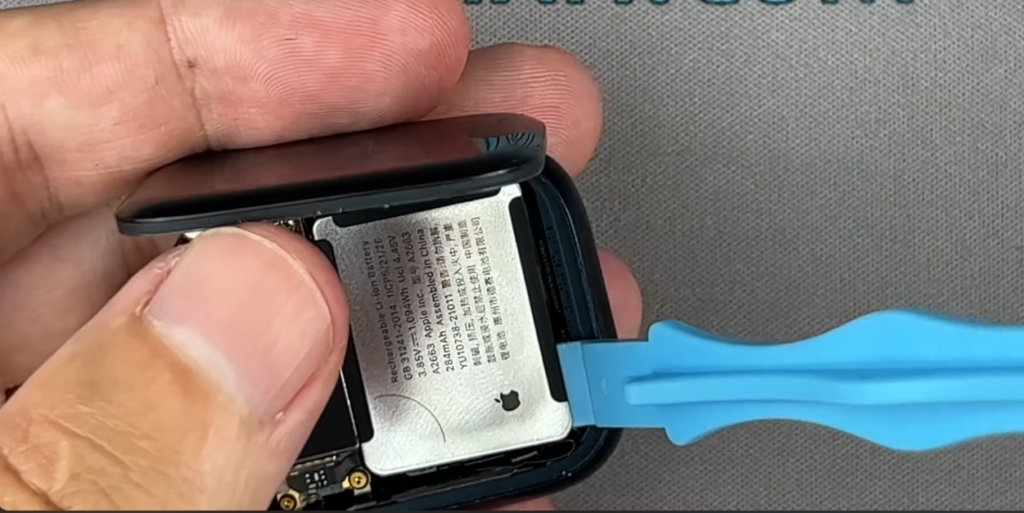
This is one of the most important decisions for users facing charging problems.
Battery replacement is usually the better option when:
- The watch is less than 3-4 years old
- It is a premium model like the Apple Watch or the Samsung Galaxy Watch
- The device still functions normally aside from battery issues.
A new battery can restore performance at a fraction of the cost of a new smartwatch.
Watch Replacement becomes more practical when:
- The device is outdated
- Multiple components are failing
- Repair costs approach the price of a new watch
For most users dealing with smartwatch battery not charging issues, replacing the battery is both cost-effective and practical.
Smartwatch Not Charging Properly?
A quick diagnostic can reveal whether the issue is battery wear, charging coil damage, or another internal fault before it leads to complete device failure.
FAQs
Why does my smartwatch only charge when I move it?
This usually indicates poor contact alignment or a worn charging cable. It can also signal internal coil damage.
Can water damage stop a smartwatch from charging?
Yes. Moisture can cause corrosion inside the device, blocking electrical connections and preventing charging.
Is smartwatch battery replacement worth it?
In most cases, yes, especially for newer or high-end models. It restores performance without the cost of a new device.
Why does my watch heat up while charging
Some warmth is normal, but excessive heat often points to inefficient charging, battery issues, or poor alignment.
Final Insight
When charging only operates at specific angles and stops functioning suddenly and produces excessive heat, early diagnosis normally protects equipment from more severe, destructive damage to the main circuit board.
The quick repair check helps identify the source of the problem, which exists between battery issues and the internal charging system, before any parts need to be replaced.